





Casa del Marqués del Apartado
Casa del Marqués del Apartado
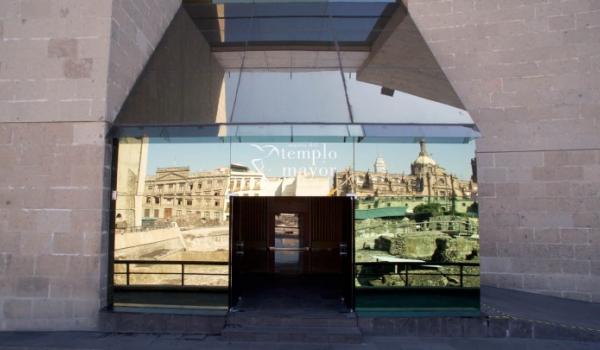
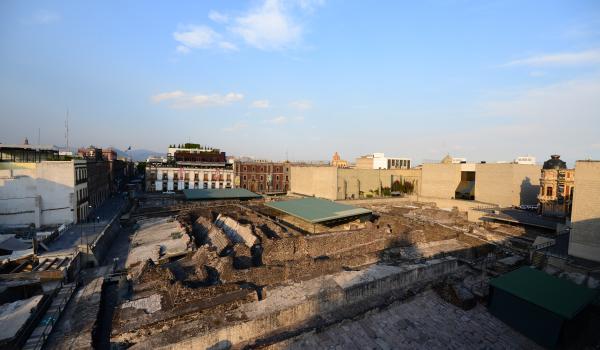
Remains of a staircase and two sculptures led to the creation of archaeological windows. These vestiges were found inside a neoclassical building, constructed between 1795 and 1805 by architect Manuel Tolsá.
When the Spanish arrived, this property was given to Luis Francisco and Gonzalo Acevedo. After passing through several owners, Francisco Manuel Cayetano de Fagoaga y Arozqueta, gold and silver collector between 1718 and 1778, ordered the construction of this building, which was designed by Spanish architect Manuel Tolsá. During the 19th century, it was inhabited by different families until, in 1900, the federal government acquired it for 220,000 pesos. It was then that Porfirio Díaz designated it as the headquarters of the Ministry of Justice and Public Instruction.
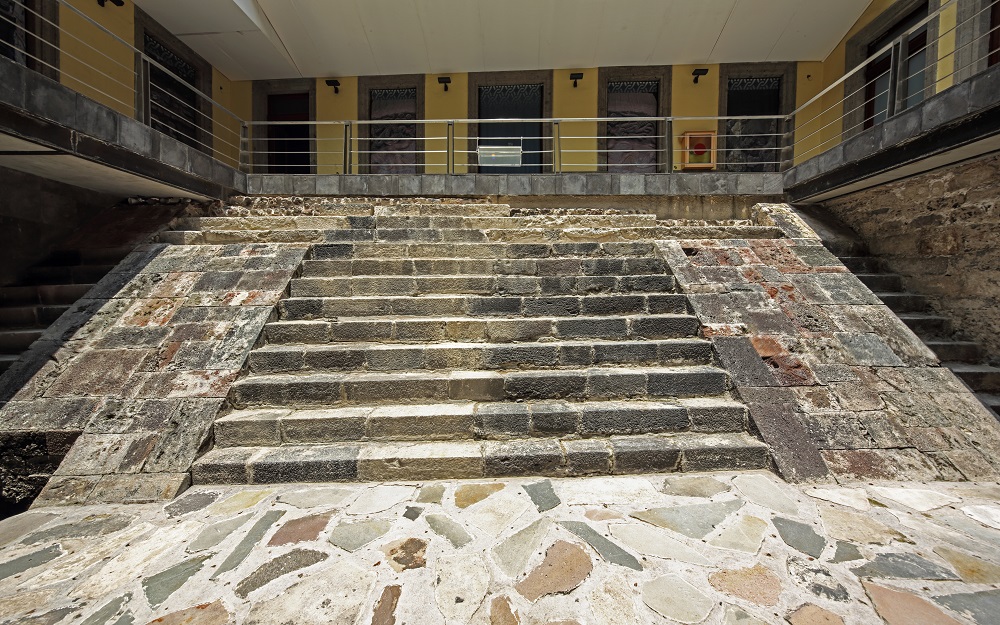
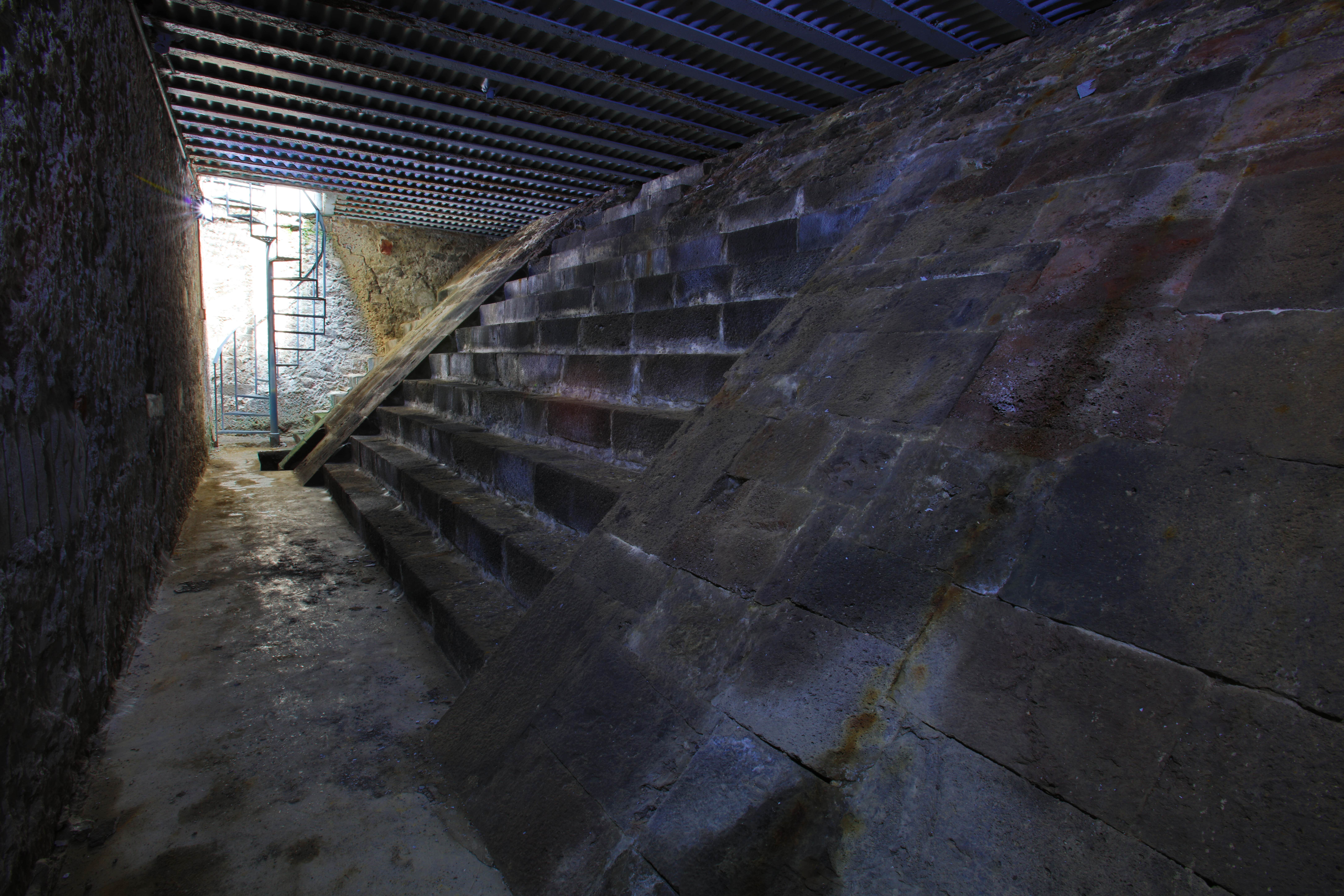
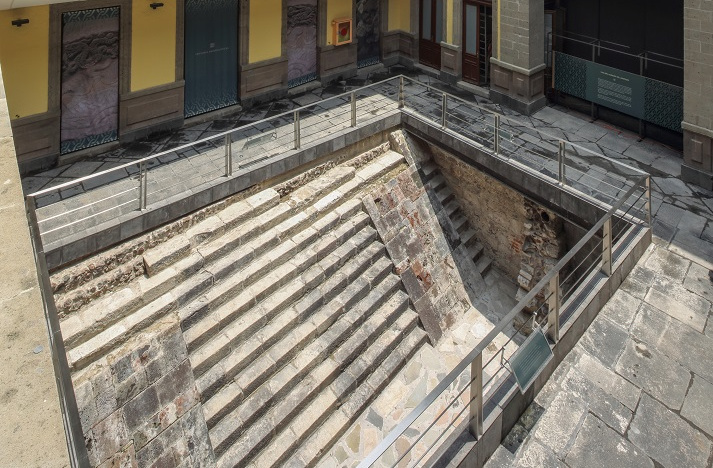
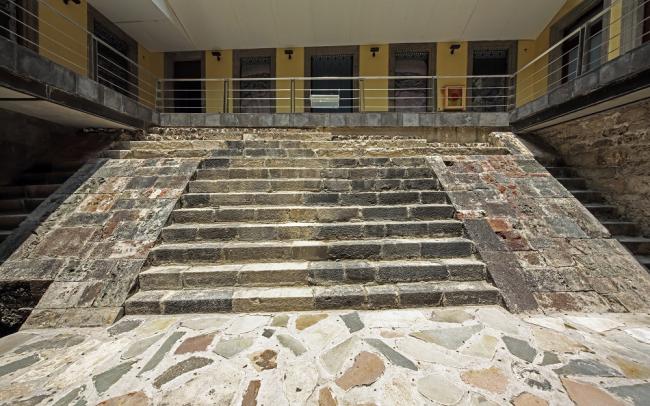
During the building's renovation, on November 19, 1901, a large basalt sculpture representing a xiuhcóatl (fire serpent) was found, and on December 9, an océlotl cuauhxicalli. Later, a staircase consisting of 12 steps made of basalt blocks was located. The remains of a dead tree are preserved at the base. This structure is delimited by two alfardas and forms part of a platform.
The interest sparked by these findings led to the creation of the first archaeological window. The remains are located under the central courtyard. The window is 12.7 m long, 4 m wide, and 3.4 m deep.
Subsequently, Dr. Elsa Hernández Pons led excavations that revealed the continuation of the staircase and a basalt cuauhxicalli in the shape of an eagle in 1985. In 2022, it was restored again to house the offices of the National Council for Culture and the Arts.
Source: Raúl Barrera Rodríguez, director of the Urban Archaeology Program